
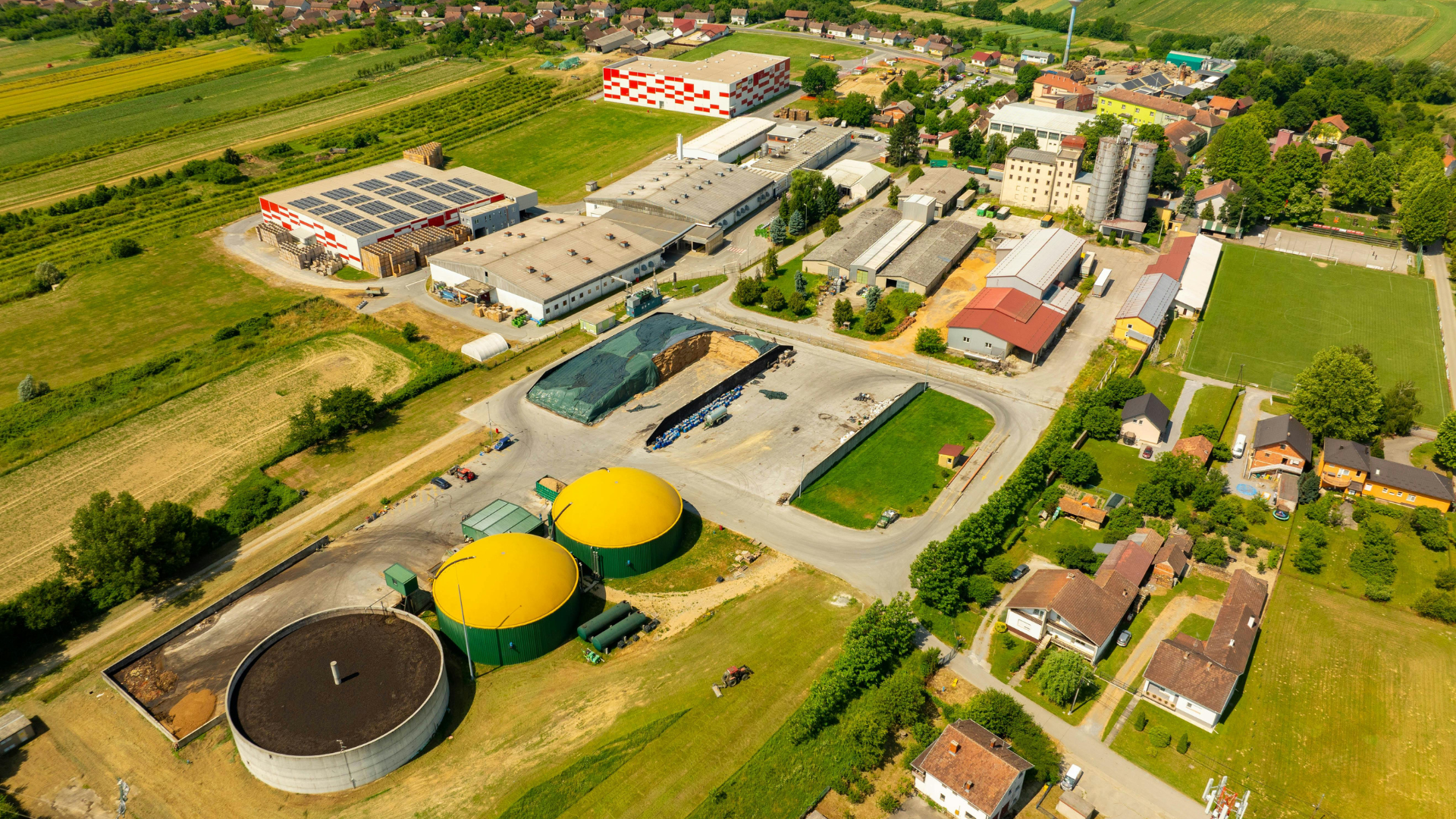
Engineering and biological O&M answer different questions at different times. EPC engineering delivers a plant that is sized, built and commissioned, with a typical process guarantee of 12-24 months. Biological O&M maintains operational control over the following 15-25 years, against a diet that changes, a consortium that evolves and supply contracts that are renegotiated. Three structural asymmetries —temporal, domain and contractual— explain why both layers are needed, and why neither can cover the other’s work.
The question that biological O&M teams hear most often is entirely legitimate: “if I already have my EPC engineering firm, what exactly does an operational control service like Smallops add?”. It is a sensible question, not a defensive one.
And the answer is not “the same but better”, because that would be false.
The answer is that biogas engineering vs O&M is not a choice but a functional distinction: they answer different questions at different times. Confusing one with the other is the most frequent cause of operationally sub-optimal plants with impeccable engineering.
This article describes the three structural asymmetries that separate engineering from operational control, the quantitative data behind them, and where Smallops positions itself relative to the engineering you already have.
The legitimate question: biogas engineering vs O&M, aren’t they the same?
An EPC engineering firm (Engineering, Procurement and Construction) does three things exceptionally well: it sizes the digester according to the project’s mass and energy balance, manages equipment procurement and plant construction, and carries out commissioning until the contractual design parameters are reached.
Those three jobs are indispensable, complex and demand very specific technical skills: process calculation, project management, installer coordination. A good EPC delivers a plant that starts up correctly and produces within the agreed specifications.
Biological O&M begins where engineering ends. Its question is not “is this plant well sized?”, but “how is operational control maintained when the real diet diverges from the design diet and has high temporal variability, when the microbial consortium evolves, when supply contracts change?”.
The two disciplines are not better or worse, they are different. One builds the plant correctly; the other keeps the plant operating satisfactorily. Three asymmetries explain why you need both.
Temporal asymmetry: 1-2 years of EPC vs 20 years of operation
The process guarantee of a typical EPC contract covers between 12 and 24 months after commissioning. It is the period in which engineering guarantees that the plant reaches the contractual design parameters: biogas production, VS removal, digestate quality.
The real service life of a biogas plant is between 15 and 25 years. The plant operates for more than 20 years with a contractual guarantee that covered only the first 1-2 years. The ratio is roughly 10 to 1 between operation and EPC.
This is not an engineering failure. It is the nature of the contract. Engineering cannot contractually commit to a plant’s performance over 20 years because the variables that determine it are outside its control: the real diet, the supply contracts, the staff’s operational decisions, the microbiological evolution of the consortium.
The temporal asymmetry translates into a concrete fact. After the 24 months of process guarantee, the plant is left alone facing its own regime of variability. And that variability is not linear: the first two years are relatively stable because the consortium is still adapted to the commissioning diet; the following years accumulate drift.
Domain asymmetry: sizing vs microbiology
Engineering thinks in terms of steady-state mass and energy balances. It calculates flows, sizes reactors, specifies equipment. Its mental model is a plant operating in the nominal regime: reference diet, design organic loading rate (OLR), stable parameters.
Biological operational control thinks in terms of microbial kinetics and the consortium’s dynamic response. Its mental model is a plant operating far from the nominal regime: the real diet (not the reference one), everyday perturbations, load transients, consortium evolution against changing substrates.
Both mental models are correct in their domain. Neither covers the other’s domain.
A concrete example. A plant may be perfectly sized for an OLR of 4 kg VS/m³·day with a reference diet of 70% pig slurry and 30% maize silage. When the plant starts up, that diet works exactly as the balance predicted. But 85% of plants diversify their diet during the first years for contractual or business-opportunity reasons. The new diet has a different C/N ratio, a different TAN concentration, a different inhibitor profile.
Engineering is not the discipline to manage that transition. Microbiology applied to operational control is. More detail on the analytical framework in the post on stabilise the anaerobic digester.
Contractual asymmetry: reference diet vs real diet
Every biogas plant has two diets. The reference diet is the one in the EPC contract and the mass balance: it defines the nominal flows, the nominal compositions and the expected yields. It is the plant the design was based on.
The real diet is the one that actually enters the digester each week. It has flows that vary with supplier availability, compositions that vary with the season, and suppliers that change with commercial contracts.
The contractual asymmetry is that the EPC’s process guarantee is measured against the reference diet, not against the real diet. If the plant does not reach the design parameters during the 12-24 months of guarantee while operating with the real diet, there are two possible interpretations of the contract.
Interpretation 1: engineering did not deliver
The plant does not reach the parameters: engineering is responsible for reviewing the sizing, adjusting equipment or compensating in some way.
Interpretation 2: the real diet diverges from the reference diet
The plant does not reach the parameters because the raw material processed is not the one contractually agreed. Engineering has done its part; the problem is one of operation or supply.
The two interpretations usually coexist, and the technical discussion between operator and engineering can last months. Meanwhile, the plant keeps producing below its real potential.
Biological operational control has a specific role in this asymmetry: technically characterising the real diet, quantifying its divergence from the reference one, and designing the operational adjustment that recovers productivity without entering a contractual dispute. It does not replace the EPC; it operationally documents what the EPC cannot commit to.
The three asymmetries at a glance
| Asymmetry | What the EPC covers | What biological O&M covers |
|---|---|---|
| Temporal | 1-2 year guarantee after commissioning | Operational control over the following 15-25 years |
| Domain | Sizing and steady-state balance | Microbial kinetics and the consortium’s dynamic response |
| Contractual | Guarantee against the reference diet | Operational adaptation to the changing real diet |
The table above is not a criticism of the EPC model. It is the functional description of what each layer covers. A plant without competent EPC does not start up; a plant without biological O&M does start up and operate, but accumulates drift that translates into a sustained loss of productivity and into biological shutdowns whose average cost is 8,000 to 25,000 € per week depending on plant size.
Where Smallops complements biogas engineering vs O&M
Smallops does not compete with your EPC engineering. It comes in at three moments where engineering has already fulfilled its role and the plant needs different capabilities.
Moment 1 · Operational diagnosis after the guarantee period
When the EPC’s process guarantee period has passed and the plant begins to show the first drift. An Operational Excellence Diagnosis characterises the real state of the process over 14 variables, identifies the real limiting factor and proposes the intervention plan. It is not plant-modification engineering; it is operational-control engineering on the existing plant.
Moment 2 · Technical audit before diet changes
When the plant is weighing a change of substrate supplier, expanding co-digestion or incorporating new co-substrates, the operational risk is high. A prior analytical characterisation of the new substrate and a kinetic simulation of its impact on the current consortium reduce that risk. The original engineering is not the discipline for that audit; biological O&M is.
Moment 3 · Selection and validation of advanced interventions
When the plant considers applying advanced tools (chemical additives, pre-treatments, nanoparticles), the correct decision requires a prior technical protocol. Detail of the Smallops protocol in the post additives decision protocol. Engineering does not sign this decision; biological O&M documents it technically.
Frequently asked questions about biogas engineering vs O&M
What is the difference between engineering and biological O&M?
An EPC engineering firm sizes, builds and commissions the plant. Its deliverable is a facility that reaches the contractual design parameters with the reference diet. Biological O&M maintains operational control over the plant’s 15-25 years of service life against a real diet that changes, a microbial consortium that evolves and supply contracts that are renegotiated. Both disciplines are indispensable and cover functionally different domains.
What does an EPC process guarantee cover?
The process guarantee of a typical EPC contract covers between 12 and 24 months after commissioning, during which engineering guarantees that the plant reaches the design parameters with the reference diet agreed in the contract. It covers biogas production, VS removal and digestate quality according to the contractual specifications. It does not cover the plant’s future performance nor adaptations to diets other than the reference one.
When does the EPC guarantee stop applying?
The EPC’s process guarantee usually stops applying between 12 and 24 months after the signing of the provisional acceptance certificate, depending on the specific contract. From that point, the plant operates without a contractual performance guarantee. Any significant change of diet, supplier or operating regime during the guarantee period usually triggers clauses that release engineering from its commitment, even if the guarantee had not yet expired by time.
Does Smallops replace or complement engineering?
Smallops complements engineering, it does not replace it. It does not design new plants or manage EPC contracts. It comes in when the plant is already built and operating and needs capabilities different from those engineering delivered: operational diagnosis, audit of diet changes, and selection and validation of advanced interventions. A plant needs both layers: engineering to start up correctly, and biological O&M to operate correctly for 20 years.
Is your plant already out of the EPC guarantee period?
Operational drift does not appear in the first year; it appears between the second and the fifth. Request a Smallops Operational Excellence Diagnosis and we characterise the real state of your process over 14 variables, without entering into a dispute with your original engineering.
References and regulations
IEA Bioenergy Task 37 (2020). Operating and maintaining biogas plants. International Energy Agency. ieabioenergy.com
European Biogas Association (2022). EBA Statistical Report. europeanbiogas.eu
Drosg, B. (2013). Process monitoring in biogas plants. IEA Bioenergy Task 37. ieabioenergy.com
Lauer, M. et al. (2018). Flexible operation of biogas plants: how to improve economic performance. Biomass Conversion and Biorefinery, 8 (4), 1019-1035. doi.org/10.1007/s13399-018-0337-3