
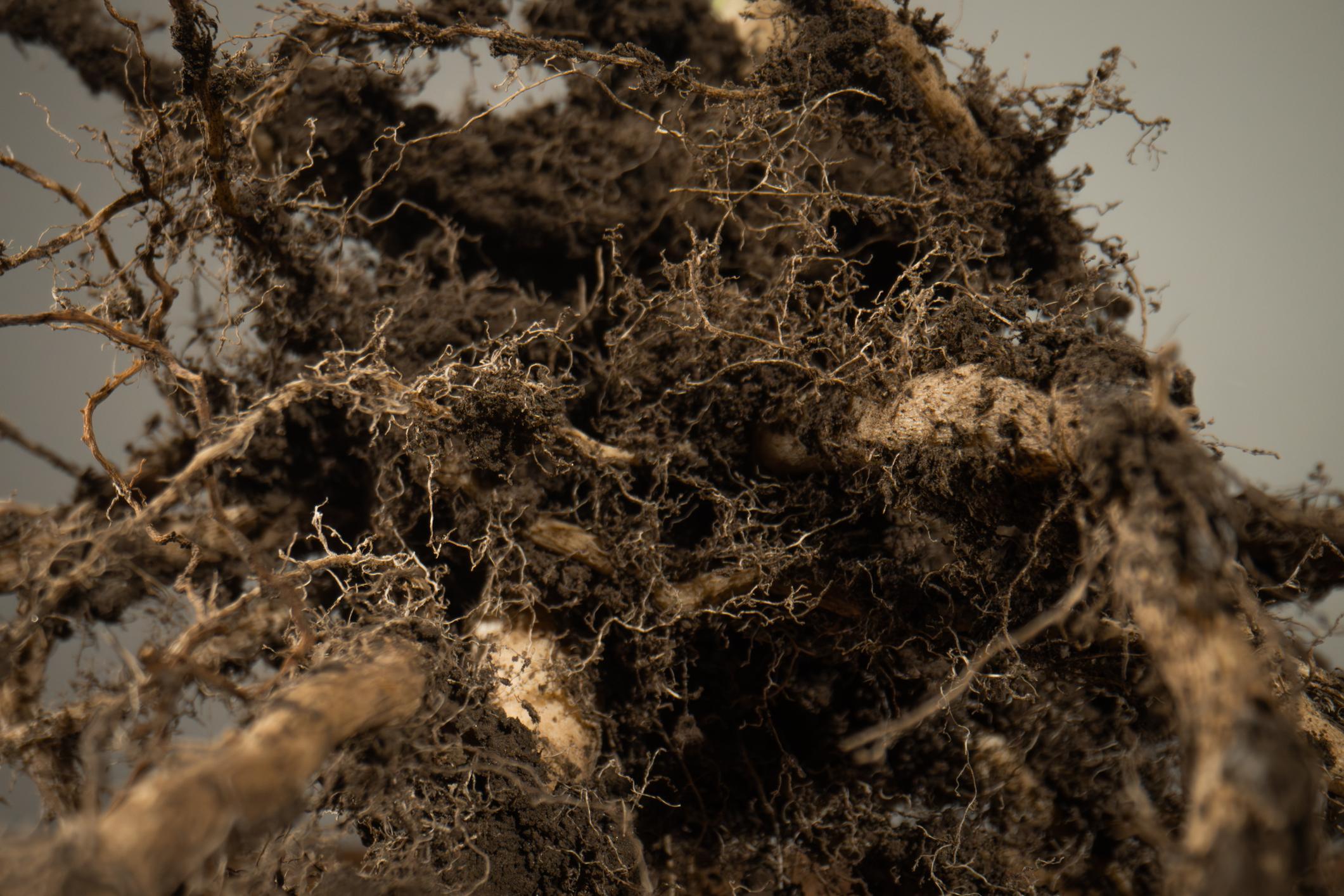
Beyond conventional organic matter
In precision agronomy, the challenge is no longer the amount of fertilizer applied, but rather its actual bioavailability in the rhizosphere. Within the complex world of humic substances, fulvic acids represent the most dynamic and physiologically active fraction.
At Smallops, we have perfected the extraction of these compounds through the advanced processing of olive pomace, transforming an olive byproduct into a high-molecular-value biotechnology tool.
Chemical characterization: the power of functional groups
Unlike humic acids (which are larger and less soluble), fulvic acids are short-chain organic polymers with a unique supramolecular configuration. Their distinctive features are:
- Oxygenation density: They possess a significantly higher proportion of carboxylic (COO) and phenolic (OH) groups than other fractions.
- Behavior as ligands: These groups act as chemical pincers that surround metal cations, forming organometallic complexes that protect the nutrient from leaching.
- Low molecular weight: Their size allows them to cross cell membranes with an ease that heavier molecules simply lack.
Solubility and stability: the pH factor
One of the biggest problems in fertigation is the precipitation of nutrients in hard water or alkaline soils. Smallops fulvic acids maintain their stability across the entire pH range:
- In alkaline soils (pH > 7.5): They prevent microelements such as Iron (Fe) or Zinc (Zn) from forming insoluble hydroxides.
- In acidic soils: They do not undergo the coagulation process that affects humic acids, maintaining the mobility of nutrients in the soil solution.
The Smallops seal: purity from the olive grove
Our formulations are not standard extracts. By processing olive pomace with our proprietary technology, we guarantee high molecular purity. This means that every drop of our product is optimized for maximum systemic penetration, free from the impurities typically found in fulvic acids from other, less-controlled sources.