
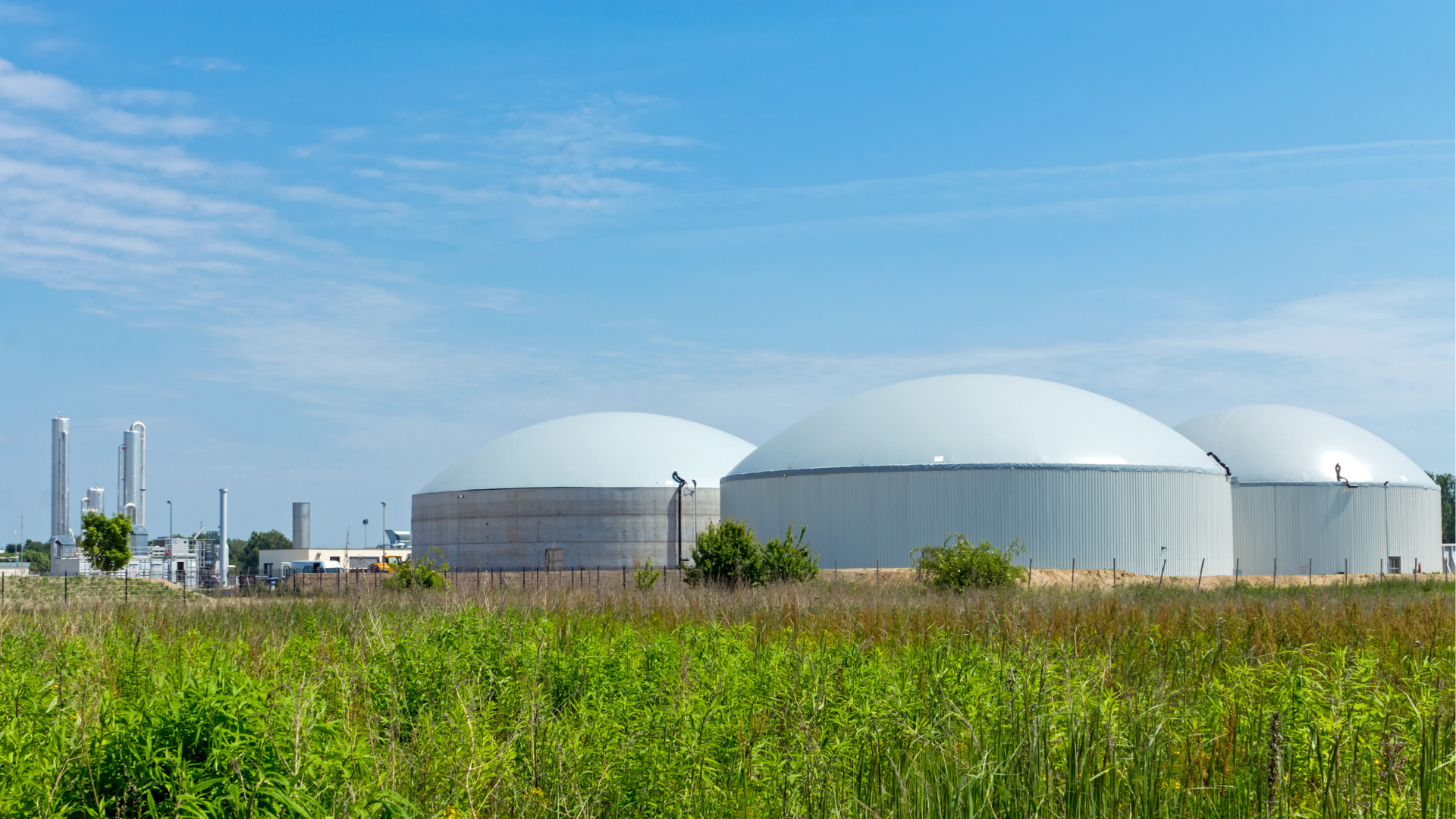
Injecting biomethane into the grid turns a biogas plant into a producer of a gas indistinguishable from natural gas, with access to the whole gas market. The path has three fronts: technical (upgrading and quality in line with the Technical Management Rules of the Spanish Gas System, NGTS), administrative (connection with the distribution or transmission operator, with a maximum of 45 working days for the grid to respond, although the total timeline is set by the works and the permits) and economic (an upgrading unit for 500 Nm³/h costs in the order of €1-2 million and revenue relies on the market plus guarantees of origin). Spain still has few plants injecting into the grid (12 in 2024 and 22 at the end of gas year 2025, according to the CNMC) and a PNIEC 2023-2030 that foresees producing 20 TWh of biogas in 2030: the room for growth is huge.
For years cogeneration was the natural destination for biogas. But more and more plants are asking the same question: what if, instead of electricity, they sold the gas? Biomethane opens the door to a larger market, with industrial demand looking for renewable gas and long-term contracts.
The jump, however, is not just buying an upgrading unit: it requires meeting a strict quality specification, processing the connection with the grid operator and setting up the certification framework that gives the gas its renewable value.
This article covers the complete procedure in Spain: regulatory framework, required quality, connection, guarantees of origin, remuneration and the concrete steps for a plant that is considering it. The general regulatory map is in the post on biogas regulation in Spain.
Regulatory framework for biomethane injection in Spain
The framework combines three pieces: general gas legislation (which regulates third-party access to the grid and the connection conditions), the quality specification for the injected gas (the Technical Management Rules of the Gas System, NGTS, approved by Order TED/181/2025) and the system of guarantees of origin for renewable gases, which makes it possible to certify and sell the renewable attribute.
Added to this are the Biogas Roadmap (March 2022) as the strategic framework and the CNMC Resolution of 19 April 2024, the first connection procedure for biomethane plants, replaced from 1 July 2025 by the Resolution of 13 June 2025, which extends it to other renewable gases and sets maximum deadlines for grid owners. Both have been smoothing the way for developers.
Technical quality requirements for biomethane
Raw biogas (55-65% CH₄, CO₂, H₂S and traces; see biogas composition) cannot enter the grid: first the H₂S has to be removed (biogas desulphurisation is the essential previous step) and then the CO₂ is separated in biogas-to-biomethane upgrading until standard grid quality is reached.
The quality required of injected biomethane is set by the Technical Management Rules of the Gas System (Order TED/181/2025, section 2.5.2.2): Wobbe index within the grid range and maximum limits for H₂S and COS, O₂, CO₂, hydrogen and siloxanes, among others. For siloxanes, the rules refer to UNE-EN 16723-1. In practice, injected biomethane must be interchangeable with the natural gas circulating in the grid.
Connection process to the distribution grid
The connection is processed with the distribution operator (or the transmission operator, depending on the connection point): feasibility and connection point request, technical study, connection agreement, construction of the connection line and the metering and odorisation station, and commissioning with continuous quality verification.
The CNMC sets deadlines for each phase of the request (Resolution of 13 June 2025), but the total timeline depends on the connection works and the permits. It is the part of the project that demands the most patience: the grid must respond within a maximum of 45 working days from a complete request and the developer has 60 working days to accept the quote; then come the works and the permits, so it is worth launching it in parallel with the upgrading design, not afterwards.
Guarantee of origin certificates for biomethane
The guarantee of origin (GO) is the certificate that proves that one MWh of injected gas is of renewable origin. Since 2022 Spain has had an official system of guarantees of origin for renewable gases, created by Royal Decree 376/2022 and implemented by Order TED/1026/2022, managed by Enagás GTS: the plant registers, its injections are certified and the GOs can be sold together with the gas or separately.
This certificate is the heart of the business: it is what allows the buyer (industry, retailer) to prove renewable consumption and decarbonisation, and therefore what justifies paying for biomethane above natural gas. For some uses, such as the EU emissions trading system, the sustainability certification of the biomethane is also required.
Remuneration regime: auctions, premiums, private contracts
Unlike renewable electricity, Spanish biomethane has not had a production premium: remuneration is built on the gas price plus the value of the GO, usually secured through long-term bilateral contracts (BPAs, biomethane purchase agreements) with industries or retailers.
That may change soon: Royal Decree-law 7/2026 requires the Government to set annual biomethane quotas in gas sales, and the draft royal decree being processed proposes starting at 0.5% in 2028 and reaching 6% in 2035 (as of 30 September 2026 it had not yet been approved).
On the other hand, investment aid has been significant (European funds, IDAE and regional lines). The typical economic equation: upgrading for a 500 Nm³/h biogas plant in the order of €1-2 million of investment in the unit, not counting the connection line, partly financed with aid and paid back with a long-term BPA (the contracts published in Spain range from 7 to 12 years).
Comparison: Spain versus Germany, France and Italy
Spain is arriving late but with the fourth largest biomethane potential in Europe, according to the EBA. Biomethane plants in 2024 according to the European Biogas Association (EBA Statistical Report 2025):
| Country | Biomethane plants (2024) |
|---|---|
| France | 760 |
| Germany | 260 |
| Italy | 137 |
| Spain | 15 (of which 12 injected into the grid that year according to the CNMC) |
The reading for a Spanish developer: the bottleneck is neither demand (industry is looking for renewable gas) nor substrate availability, but permitting and closing the economic equation without a regulated tariff.
Steps for a plant considering the jump
- 1. Baseline audit: actual biogas flow and quality, production stability and room for process improvement (raising production by 10% changes the sizing of everything else).
- 2. Upgrading pre-design: technology (membranes, PSA, water or amine scrubbing), size and space in the plant, including the prior desulphurisation.
- 3. Connection request: feasibility and connection point with the distribution operator, as early as possible (it is the long lead item of the project).
- 4. Economic equation: CAPEX with available aid, BPA or sales options and expected value of the GOs.
- 5. Execution and certification: construction, commissioning, registration in the GO system and continuous quality verification.
Frequently asked questions about biomethane injection
How is biomethane injected into the grid in Spain?
On three parallel fronts: technical (desulphurising the biogas, separating the CO₂ in an upgrading unit and reaching the quality set by the Technical Management Rules of the Gas System), administrative (processing the connection with the distribution or transmission operator: feasibility, connection agreement, connection line and metering station) and certification (registration in the guarantees of origin system to prove the renewable nature of the gas). The grid must respond to the connection request within a maximum of 45 working days; the total timeline is set by the connection works and the permits.
What quality must biomethane have to be injected into the grid?
The quality set by the Technical Management Rules of the Gas System (Order TED/181/2025, section 2.5.2.2): Wobbe index within the grid range and maximum limits for H₂S and COS, O₂, CO₂, hydrogen and siloxanes, among others (for siloxanes, the rules refer to UNE-EN 16723-1). The aim is for biomethane to be fully interchangeable with natural gas. Quality is verified continuously at the injection station.
How much does a biomethane upgrading plant cost?
For a biogas plant in the order of 500 Nm³/h, the upgrading unit represents an investment of between €1 and €2 million, to which the connection line and the injection station must be added. Public investment aid (European funds, national and regional lines) has covered a significant part in recent projects; the rest is paid back with long-term sales contracts.
What are biomethane guarantee of origin certificates?
They are the official certificates that prove that each MWh of injected gas comes from renewable sources. The system was created by Royal Decree 376/2022 and is managed by Enagás GTS: the plant registers, its injections generate guarantees of origin and these are sold together with the gas or separately. They are the piece that gives biomethane its renewable premium: they allow the buyer to prove decarbonisation and renewable gas consumption.
Smallops and the jump to biomethane
Upgrading is sized on the biogas the digester produces today; if the process performs below its potential, the whole project inherits that shortfall. At Smallops we prepare the plant for the jump (production, stability and gas quality) with an Operational Excellence Diagnosis.
Is your biogas ready to become biomethane?
Request a Smallops Operational Excellence Diagnosis: we assess the flow, stability and quality of your biogas and tell you what to optimise before sizing the upgrading.
References and standards
Order TED/181/2025, of 13 February, approving the Technical Management Rules of the Spanish Gas System. boe.es
Royal Decree 376/2022, of 17 May (guarantees of origin system for renewable gases), and Order TED/1026/2022, of 28 October (management procedure). boe.es
CNMC, Resolution of 13 June 2025 on the connection procedure for biomethane plants, and wholesale gas market monitoring bulletins (December 2024 and December 2025). cnmc.es
Royal Decree-law 7/2026, of 20 March (art. 26, biomethane penetration targets). boe.es
IDAE (2022). Hoja de Ruta del Biogás (Biogas Roadmap). idae.es
EN 16723-1:2016. Natural gas and biomethane for use in transport and biomethane for injection in the natural gas network. CEN. cen.eu
European Biogas Association (2025). EBA Statistical Report 2025. europeanbiogas.eu